
Case Studies
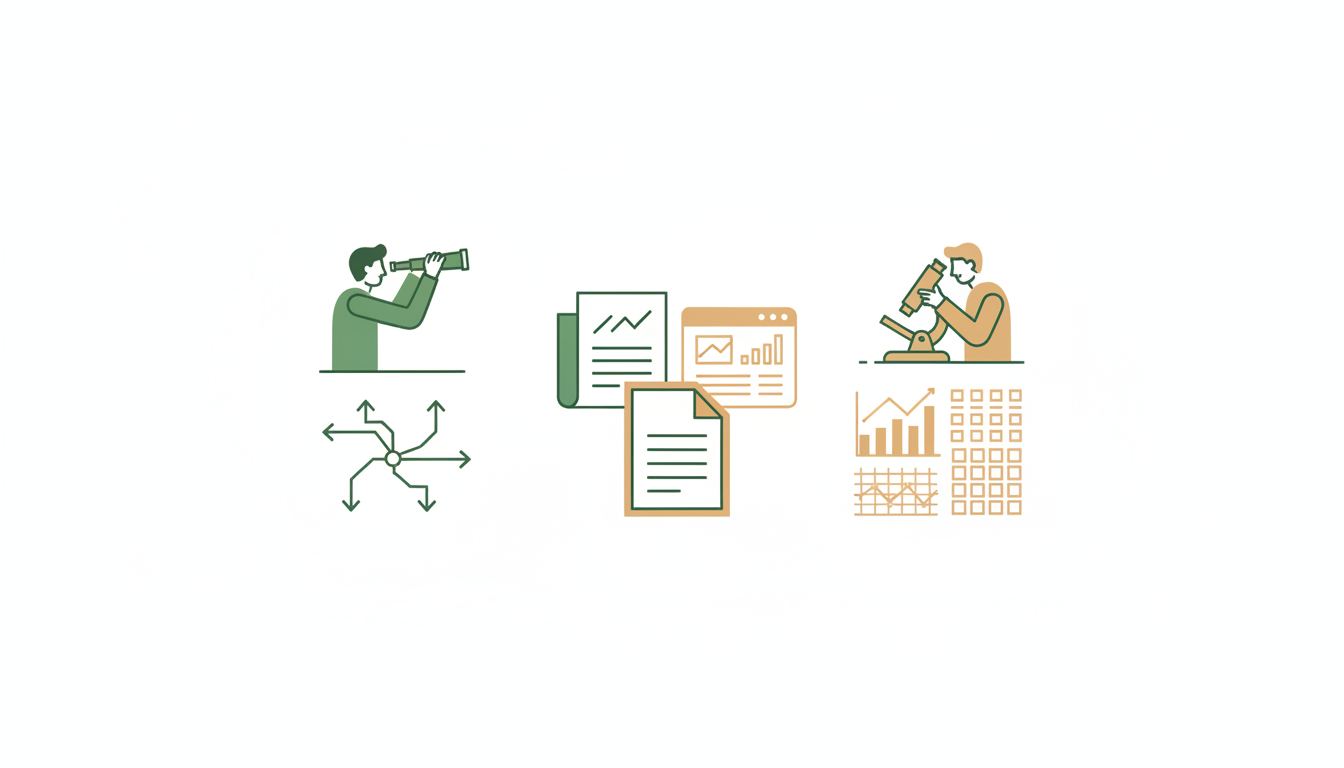
These walkthroughs show how Alfred and Ada approach the same high-stakes scenario from different angles. Alfred operates as the strategist — framing the problem, mapping second-order effects, and structuring the narrative. Ada operates as the analyst — working from raw data, surfacing patterns, and building evidence-backed outputs.
Each case study includes a step-by-step flow diagram showing the expected tool chain, decision points, and deliverables.
1. APAC Market Entry
A company is evaluating expansion into the Asia-Pacific region. Both personas work on the same scenario but solve different parts of it.
Alfred: Map Second-Order Effects
Alfred's job is to think beyond the obvious. He researches the market, identifies direct implications, and then maps the ripple effects that most analyses miss.
Map the second-order effects of entering the APAC market for [company/sector]. Start with the direct implications — regulatory, competitive, distribution — then map what each of those triggers downstream. I want supply chain effects, talent market shifts, likely competitor responses, and capital flow implications. End with a decision matrix that scores each path by upside, risk, and reversibility.Alfred is wired to connect signals across domains and surface the effects that only show up one or two moves later.
Ada: Analyse Entry Risks and Upside
Ada works from the dataset. She runs the numbers, flags anomalies, scores risks against upside, and produces a visual output the team can act on immediately.
Use the attached dataset to analyse APAC market entry risks and upside. Run a data quality check first, then profile the key variables. Build a risk-adjusted scoring model, run sensitivity on the top 3 assumptions, and output: 1) an Excel dashboard with charts, 2) a one-page summary with confidence bands for each market.Ada turns raw numbers into decision-ready analysis with explicit confidence levels so the team knows where the data is strong and where it's thin.
2. Q3 Board Narrative
The board meeting is in two weeks. The team needs a narrative that tells the truth about the quarter — wins, misses, and what comes next.
Alfred: Draft a Q3 Board Narrative with Evidence
Alfred structures the story. He pulls together fragmented inputs, decides what the board actually needs to hear, and builds a narrative arc that leads to decisions.
Draft a Q3 board narrative from the attached materials. Start with the quarter's thesis — what we set out to do and what actually happened. Classify wins and misses honestly, attribute causes, and connect each to forward-looking implications. End with the 3 decisions the board should focus on. Output as a memo and a 10-slide deck with an evidence appendix.Alfred builds narratives that survive scrutiny. He does not polish bad results — he frames them in context and connects them to what comes next.
Ada: Build a Q3 Pivot Board Narrative with Evidence
Ada builds the quantitative backbone. She takes the same raw inputs, structures the data story, and creates the pivot tables and charts that make the narrative undeniable.
Build a Q3 board narrative from the attached data. Clean and normalize the inputs, then run QoQ and YoY variance analysis across all segments. Create pivot tables, flag anomalies, and decompose trends. Output: 1) a KPI scorecard with RAG ratings, 2) an Excel workbook with pivot views, 3) a chart deck with waterfall, variance, and trend visuals ready for the board.Ada makes the numbers tell the story. Her output is the evidence layer that the narrative sits on — charts, pivots, and scorecards that answer the 'show me' question.
3. Enterprise AI Competitive Landscape
The strategy team needs a comprehensive map of the enterprise AI market — who is where, what's changing, and where the openings are.
Alfred: Build an Enterprise AI Competitive Landscape
Alfred builds the strategic map. He researches broadly, classifies players by positioning, and identifies the whitespace that matters for the company's next move.
Build a comprehensive competitive landscape for enterprise AI. Identify the key players, classify them by positioning (horizontal vs vertical, open vs closed, enterprise vs SMB), compare pricing and GTM approaches, and map product capabilities. End with: 1) a strategic group map, 2) whitespace analysis, 3) threat assessment, and 4) ranked opportunities. Output as a strategy memo and a presentation deck.Alfred does not produce a feature comparison spreadsheet. He maps the market in terms of strategic positioning, competitive dynamics, and actionable whitespace.
Ada: Generate an Enterprise AI Competitive Map from Raw Research
Ada takes raw research inputs — articles, reports, product pages — and turns them into a structured, evidence-grounded competitive map with quantitative backing.
Use the attached research materials to generate a structured competitive map of enterprise AI. Extract companies, products, and metrics from each source. Cross-reference findings, build a feature scoring matrix, layer in funding signals and sentiment data, and produce: 1) a ranked competitive matrix in Excel, 2) a visual quadrant map, 3) a one-page executive summary with the strongest and weakest evidence flagged.Ada turns a pile of research tabs into a structured, scored, visual competitive map — with every claim traceable to a source and every ranking backed by explicit scoring criteria.
How These Work Together
The real power is running Alfred and Ada on the same problem. Alfred frames the question and structures the narrative. Ada provides the quantitative evidence and visual proof. The combination produces outputs that survive both the 'so what?' and the 'show me' tests.